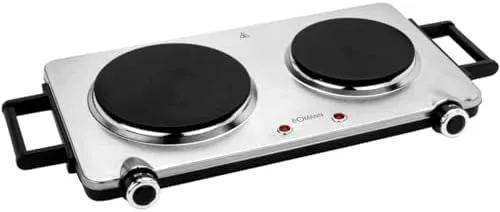
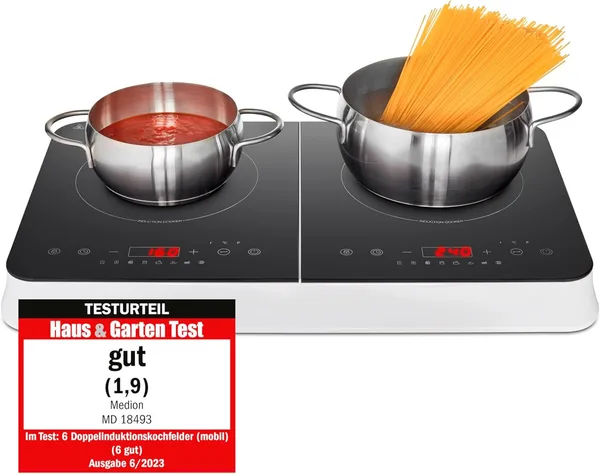
Cast iron, glass ceramic or induction: which hob type is right?
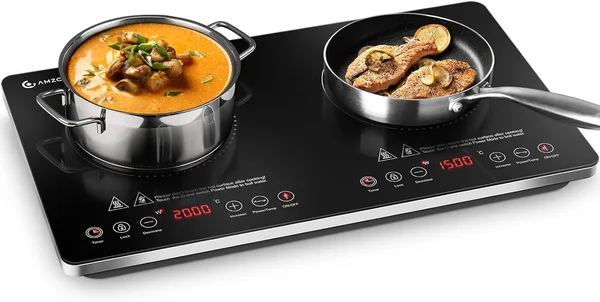
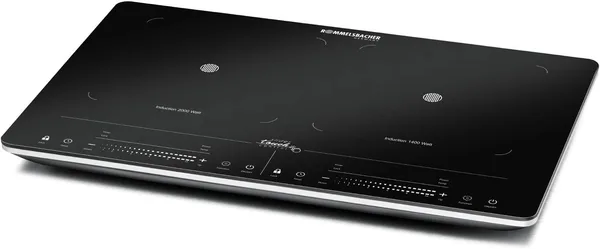
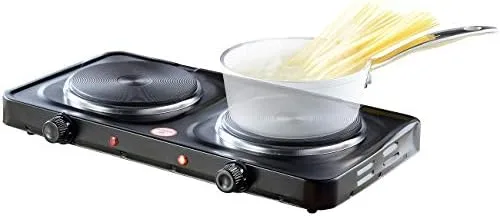
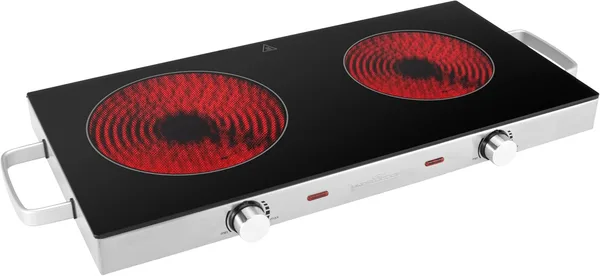
Cast iron (Rommelsbacher THS) and glass ceramic (ProfiCook) work with any pan: robust and easy-care respectively, but slower. Induction (AMZCHEF, MEDION) is the fastest, most efficient and safest, but needs magnetic cookware. Rule of thumb: keep using your existing pans → cast iron or ceramic; the most modern, fast cooking → induction.
Which cookware works on which hob?
You can put any pan on cast-iron and glass-ceramic plates: stainless steel, aluminium, enamel, glass. Induction needs magnetic (ferromagnetic) cookware; check: if a magnet sticks to the base of the pan, it fits. Pure aluminium, copper and glass do not work on induction. If you want to keep existing aluminium or glass pans, the ProfiCook ceramic or the Tristar is the right choice.
Is a portable double hob a full cooker replacement?
For single and two-person households, shared flats, tiny homes, garden sheds or as an additional hob: yes. Two zones allow parallel cooking and frying. What is missing is an oven, which you replace with an air fryer or a mini oven. Note with all portable double hobs: the total power is shared when both zones run at full power at the same time.
Why does the power split between two cooking zones?
Portable double hobs plug into a normal household socket (max. about 3,500 W). The stated total power is therefore shared between both zones when you use them both at full power at once. With one zone, almost the full power is available. This particularly affects the high-wattage induction fields, but in everyday use (one zone simmering, one frying) it is not a problem.
What does a good double hob cost?
The range is wide: a simple classic plate costs from around €30 (Tristar), an easy-care glass ceramic from about €70 (ProfiCook), induction from about €80 (MEDION) up to about €150 for the premium brand field (Rommelsbacher). More money mainly buys speed, efficiency, finer control and better build quality; for occasional cooking, the cheap plate is enough.