How many litres of mini oven do I need?
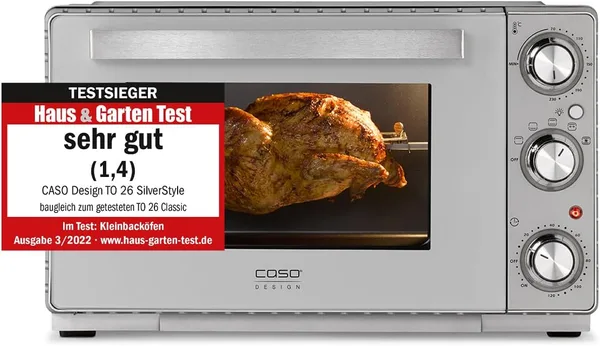
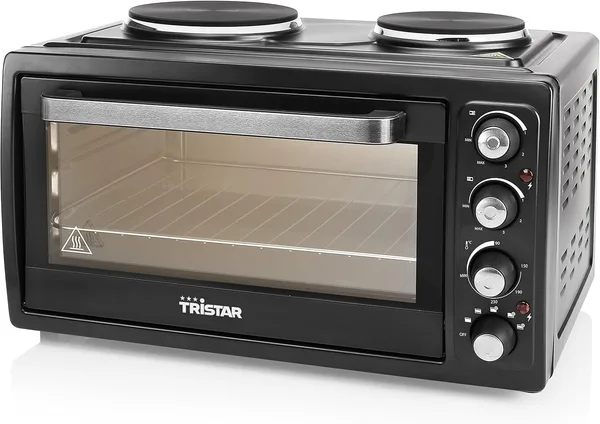
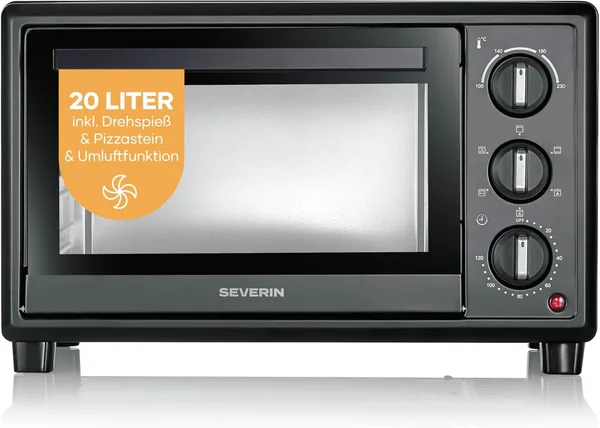
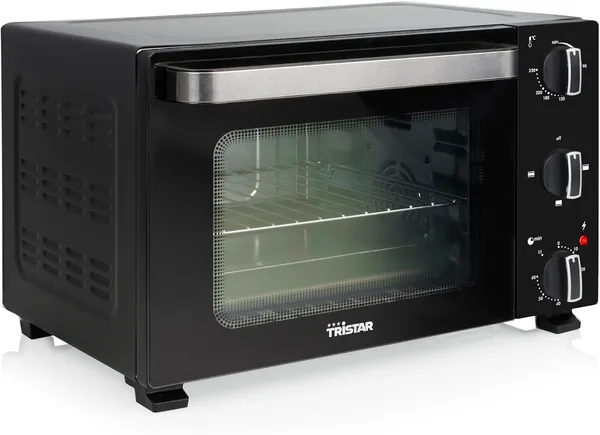
Rule of thumb by number of people: 20 litres is enough for a single (toast, small pizza, one bake), for example the Severin TO 2079 or Tristar OV-3650. 26 to 30 litres is comfortable for 1 to 2 people and a whole chicken on the rotisserie (Severin TO 2056, Caso TO 26). 38 litres is offered by the Tristar OV-1443, which also brings hobs.
Is there a mini oven with hotplates?
Yes: the Tristar OV-1443 combines a 38-litre fan oven with two hobs (1,000 + 600 W). One appliance therefore replaces cooker and oven on a normal socket, without a fixed connection. Just right for flats, student rooms and garden sheds where no cooker is installed.
Fan oven or top/bottom heat: which is better?
Fan oven distributes the heat evenly with a fan, is good for several levels and somewhat more economical; almost all models here have it. Pure top/bottom heat (as on the cheap Tristar OV-3650) is enough for single trays and saves money. If you bake often and in variety, you should go for a fan oven model; for occasional baking up, top/bottom heat is enough.
Can a mini oven replace a normal oven?
For 1 to 2 people, yes: with 26 to 38 litres, fan oven and rotisserie, the larger models bake pizza, bakes, bread rolls and chicken. For large family trays or several courses at the same time, any mini oven reaches its limits. In a pantry or single kitchen without a built-in oven, though, it is a full replacement, often even more economical.
Does a mini oven use less power than a large one?
Generally yes: with 1,300 to 1,650 watts and a small cooking space, a mini oven heats up faster and has less volume to warm than a 60 cm built-in oven. For small portions it is therefore more efficient. Only the Tristar OV-1443 draws up to 3,100 W with oven plus two hobs, but then because it replaces two appliances.